3,269 words • English • May 25, 2026
The Two-Minute Rule and Momentum Building: Breaking Tasks into Smaller Chunks and Gaining Traction
Did you know that procrastination costs the global economy an estimated $1 trillion annually in lost productivity? [Source: University of California, Irvine research, as cited in various productivity studies]. That’s a staggering figure that highlights how much we, as individuals and a society, struggle with getting started on important tasks. We all have those projects, those goals, those ambitions that sit on our to-do lists, gathering dust, often because the sheer size or perceived difficulty feels overwhelming. This is where the power of breaking down tasks into smaller, more manageable chunks comes into play, and a particularly elegant solution is the Two-Minute Rule.
In our fast-paced world, it’s easy to feel like we’re constantly juggling demands. From work deadlines and personal projects to household chores and self-care, the sheer volume can lead to paralysis. We stare at our to-do lists, feeling a sense of dread, and often choose the path of least resistance: avoidance. This avoidance, however, doesn’t make the tasks disappear; it only delays them, increasing stress and diminishing our sense of accomplishment. It’s a vicious cycle that can chip away at our confidence and our ability to achieve our potential. But what if there was a simple, almost ridiculously easy way to break that cycle? What if starting was no longer the hardest part?
This is the essence of the Two-Minute Rule, popularized by productivity expert David Allen in his book Getting Things Done. The core idea is simple: if a task takes less than two minutes to complete, do it immediately. This isn’t just about ticking off small items; it’s a strategic approach to building momentum and overcoming the inertia that often prevents us from tackling larger, more significant goals. By consistently applying this rule, we can create a positive feedback loop, where small wins lead to bigger wins, and the daunting becomes achievable.
The Psychology of Overwhelm and the Two-Minute Solution
Why is it that a task that might only take, say, ten minutes to complete can feel like climbing Mount Everest? The answer lies in our brain’s wiring. When we perceive a task as difficult, large, or unpleasant, our brain’s amygdala, the fear center, can trigger a stress response. This response can lead to avoidance behaviors, like checking social media, doing less important tasks, or simply staring blankly at the wall. This is procrastination in action, a coping mechanism designed to relieve immediate discomfort, even if it creates more problems down the line.
The Two-Minute Rule directly combats this psychological hurdle. By setting such a low threshold – just two minutes – it bypasses our brain’s natural resistance. The task becomes so small, so insignificant in terms of effort, that our brain doesn’t have time to generate a fear or avoidance response. It’s like tricking yourself into starting.
Think about it: “Clean off my desk.” That sounds like a big task. But what if you reframe it using the Two-Minute Rule?
- “Put this one paper in the file.” (Less than two minutes)
- “Throw away this one piece of trash.” (Less than two minutes)
- “Put this pen back in its holder.” (Less than two minutes)
Suddenly, the idea of “cleaning off my desk” becomes a series of tiny, effortless actions. Each completed two-minute task provides a small dopamine hit, a sense of accomplishment. This positive reinforcement makes us more likely to continue with the next two-minute task, and the next. Before you know it, a desk that looked overwhelming is now significantly tidier, and you’ve built a little bit of momentum.
This principle extends beyond physical tasks. Consider responding to an email that requires a simple “yes” or “no” answer. That’s a perfect candidate for the Two-Minute Rule. Or perhaps sending a quick thank-you note, making a brief phone call to confirm an appointment, or putting away a single item that’s out of place. These are all actions that, when done immediately, prevent clutter – both physical and mental – from accumulating.
Building Momentum: The Ripple Effect of Small Wins
The true power of the Two-Minute Rule lies not just in completing those immediate tasks, but in its ability to build momentum. Momentum, in this context, is the force that propels us forward, making it easier to continue working on a task or to transition to the next one. It’s the feeling of “getting into the groove.”
When you consistently apply the Two-Minute Rule, you create a cascade of small successes. Each completed task, however minor, serves as a tiny victory. These victories build upon each other, fostering a sense of progress and competence. This growing sense of competence can significantly boost your confidence, making you more willing to tackle slightly larger or more challenging tasks.
Imagine you want to start a new exercise routine. The thought of a full hour at the gym might feel daunting. But what if you applied the Two-Minute Rule?
- “Put on my workout clothes.” (Less than two minutes)
- “Walk to the end of the driveway and back.” (Less than two minutes)
- “Do 10 jumping jacks.” (Less than two minutes)
These small actions, performed consistently, can build the momentum needed to eventually commit to a longer workout. The key is that you’ve started. You’ve overcome the initial inertia. Once you’re in your workout clothes, the idea of doing a bit more feels less intimidating. You’ve already invested a small amount of effort, and you’re more likely to see it through. This is how the Two-Minute Rule helps you transition from “thinking about it” to “doing it.”
This concept of building momentum is crucial for long-term success in any endeavor, whether it’s a personal project, a career goal, or even recovery from addiction. As I’ve discussed before, the difference between being clean and truly healing involves consistent, positive action, and momentum is a key driver of that action. The ability to keep moving forward, even when faced with challenges, is what separates sustained progress from temporary setbacks. I’ve found that focusing on these small, achievable steps is often the most effective way to stop wasting time and start building your future.
Applying the Two-Minute Rule to Larger Goals
The Two-Minute Rule isn’t just for tidying your desk or sending quick emails. It’s a powerful tool for breaking down any task, no matter how large, into actionable steps. The trick is to identify the very first action required for a larger goal, and see if that first action can be done in under two minutes.
Let’s say your big goal is to write a book. The idea of writing an entire book is overwhelming. But what’s the first two-minute action?
- “Open a new document on your computer.” (Less than two minutes)
- “Write the title of your book.” (Less than two minutes)
- “Write one sentence for your introduction.” (Less than two minutes)
- “Outline the first chapter.” (This might take longer than two minutes, so break it down further: “Write down the main topic of chapter one.” Less than two minutes.)
By focusing on these tiny, initial steps, you make the daunting task of writing a book feel approachable. Each completed two-minute action builds momentum. You’ve opened the document, you’ve written a sentence, you’ve started outlining. These small wins accumulate, making it easier to sit down and write the next sentence, the next paragraph, the next page.
Consider another common goal: learning a new skill, like playing a musical instrument. The thought of mastering scales, chords, and songs can be intimidating. But how can the Two-Minute Rule help?
- “Pick up your guitar/piano/violin.” (Less than two minutes)
- “Tune your instrument.” (Less than two minutes)
- “Play one single note.” (Less than two minutes)
- “Practice one specific finger exercise for 30 seconds.” (Less than two minutes)
These micro-actions make the process of learning less intimidating. They are easy to do, require minimal commitment, and crucially, get you doing the thing you want to learn. This consistent engagement, even in two-minute bursts, is far more effective than infrequent, marathon practice sessions that are easily derailed by procrastination.
The Two-Minute Rule and Habit Formation
The Two-Minute Rule is also a cornerstone of habit formation. James Clear, author of Atomic Habits, emphasizes the importance of making new habits incredibly easy to start. His version of the Two-Minute Rule is: “When you start a new habit, it should take less than two minutes to do.”
The purpose here isn’t to achieve a significant outcome in two minutes, but to make the habit stick. The goal is to establish a consistent practice, and the Two-Minute Rule makes that initial commitment so small that it’s almost impossible to say no.
For example, if you want to build a habit of reading every day:
- Two-Minute Rule version: “Read one page.” This is so easy that you’ll likely read more than one page, but the commitment is just one.
- Two-Minute Rule version: “Open your book.” This simple act can be enough to get you into the habit of engaging with your reading material.
If you want to build a habit of meditating:
- Two-Minute Rule version: “Sit on your meditation cushion for two minutes.” The intention is not to achieve deep enlightenment in two minutes, but to simply show up and sit.
This approach is incredibly effective because it focuses on the process rather than the immediate outcome. By making the initiation of a habit effortless, you increase the likelihood of consistency. And it’s consistency, over time, that leads to significant results. It’s about building a system where showing up is the main victory, and the deeper benefits naturally follow. This is closely related to the idea of confidence standards and self respect, as each small act of showing up and doing something, even for two minutes, reinforces a positive self-image and a belief in your ability to follow through.
Overcoming Procrastination and Building Confidence
Procrastination is often fueled by a lack of confidence or a fear of failure. We put things off because we doubt our ability to do them well, or because the perceived effort is too great. The Two-Minute Rule is a powerful antidote to this.
By consistently completing small tasks, you build a track record of success. Each completed item, no matter how small, is evidence that you can follow through. This growing evidence of your own capability chips away at self-doubt and builds genuine confidence. You start to believe in your ability to get things done.
Furthermore, the Two-Minute Rule helps demystify large tasks. When you break down a complex project into a series of two-minute actions, the overall task becomes less intimidating. You’re not facing an insurmountable mountain; you’re taking a series of small, manageable steps up a path. This shift in perception can be transformative.
Think about how often we feel overwhelmed by our to-do lists. The sheer volume can be paralyzing. The Two-Minute Rule provides a way to clear that backlog, one tiny step at a time. Each item you complete, no matter how small, frees up mental energy and reduces the feeling of being overwhelmed. This can lead to a greater sense of control and a more positive outlook. I’ve found that having a clear end to the day, where I can reflect on what I’ve accomplished, even the small things, is incredibly important. This ties into the practice of how to end the day clean, calm, and grateful.
When the Two-Minute Rule Isn’t Enough

While the Two-Minute Rule is a fantastic starting point and a powerful tool for building momentum, it’s important to recognize its limitations. It’s primarily designed for getting started and for handling small, immediate tasks. For larger, more complex projects, it needs to be combined with other strategies.
Once you’ve used the Two-Minute Rule to initiate a task, you’ll need to transition into focused work sessions. This might involve:
- Time Blocking: Allocating specific blocks of time in your schedule for focused work on a particular task.
- Pomodoro Technique: Working in focused bursts (e.g., 25 minutes) followed by short breaks.
- Setting Larger Goals: Defining clear, achievable milestones for your larger projects.
- Deep Work: Creating an environment conducive to uninterrupted, focused concentration.
The Two-Minute Rule gets you to the starting line. The subsequent steps involve sustained effort and strategic planning. However, without that initial push provided by the Two-Minute Rule, many of us would never even reach the starting line.
It’s also worth noting that the definition of “two minutes” can be slightly flexible. The core principle is low friction initiation. If a task consistently takes you three minutes but is still easy to start, that’s perfectly fine. The goal is to make starting as effortless as possible.
The Two-Minute Rule in Different Contexts
The beauty of the Two-Minute Rule is its versatility. It can be applied across various aspects of life:
Work and Productivity
- Answering quick emails.
- Filing a document.
- Making a brief phone call.
- Scheduling a meeting.
- Clearing clutter from your workspace.
- Brainstorming one idea for a project.
Personal Life and Home Management
- Putting away dishes from the dishwasher.
- Making your bed.
- Taking out the trash.
- Watering a plant.
- Putting away one item of clothing.
- Planning your outfit for the next day.
Health and Well-being
- Taking a vitamin.
- Doing a few stretches.
- Drinking a glass of water.
- Putting on workout clothes.
- Meditating for two minutes.
- Writing down one thing you’re grateful for.
Learning and Personal Development
- Reading one page of a book.
- Watching a short educational video.
- Practicing one chord on an instrument.
- Doing one Duolingo lesson.
- Writing one sentence in a journal.
In each of these scenarios, the Two-Minute Rule acts as a catalyst, making it easier to engage with the task and build momentum. It’s about creating small, consistent actions that add up over time. This is particularly relevant when dealing with the challenges of loneliness in recovery, where small, proactive steps can make a significant difference in maintaining well-being and connection. Engaging in even a short, two-minute activity can break the cycle of isolation and provide a sense of purpose. We’ve explored strategies for how to handle loneliness in recovery and finding ways to initiate engagement, even in small ways, is key.
Conclusion: The Power of Starting Small
The Two-Minute Rule is more than just a productivity hack; it’s a psychological tool that leverages our brain’s natural tendencies to help us overcome procrastination, build momentum, and achieve our goals. By making the act of starting incredibly easy, we can bypass the initial resistance that often holds us back.
Whether you’re trying to clear your desk, start a new habit, or tackle a monumental project, the Two-Minute Rule offers a simple yet profound way to begin. It’s about recognizing that every large accomplishment is the result of countless small actions. By focusing on those initial, effortless steps, we can create a powerful ripple effect, transforming daunting tasks into achievable steps and building the confidence and momentum needed to succeed. Remember, the hardest part is often just starting, and the Two-Minute Rule makes that start almost effortless. It’s a testament to the idea that sometimes, the smallest actions can lead to the biggest changes. It’s about showing up, consistently, and letting those small wins accumulate. As we’ve seen, the principle of “still standing” is not about avoiding struggle, but about the persistent, small actions that keep us moving forward, even when things are tough. The Two-Minute Rule embodies this spirit, demonstrating why still standing is more than a phrase.
Frequently Asked Questions
What is the Two-Minute Rule?
The Two-Minute Rule, popularized by David Allen, is a productivity strategy that states: if a task takes less than two minutes to complete, do it immediately. The goal is to handle small tasks instantly to prevent them from accumulating and to build momentum for larger tasks by making the initial action incredibly easy.
How does the Two-Minute Rule help with procrastination?
Procrastination often stems from feeling overwhelmed by a task’s size or difficulty. The Two-Minute Rule bypasses this by making the initial commitment so small (less than two minutes) that the brain doesn’t trigger an avoidance response. Completing these tiny tasks provides a sense of accomplishment, building momentum and making it easier to tackle subsequent, larger steps.
Can the Two-Minute Rule be applied to large projects?
Yes, absolutely. For large projects, the Two-Minute Rule involves identifying the very first action that can be completed in under two minutes. For example, if your goal is to write a book, the first two-minute action might be opening a new document or writing a single sentence. This breaks down the overwhelming task into manageable starting points.
How does the Two-Minute Rule relate to habit formation?
The Two-Minute Rule is a key strategy for habit formation, as advocated by James Clear in Atomic Habits. The idea is to make the initiation of a new habit so easy that it’s almost impossible to resist. For example, if you want to start meditating, the two-minute habit might be simply sitting on your meditation cushion for two minutes, rather than aiming for a long session immediately. This focuses on consistency of action.
What are the benefits of applying the Two-Minute Rule?
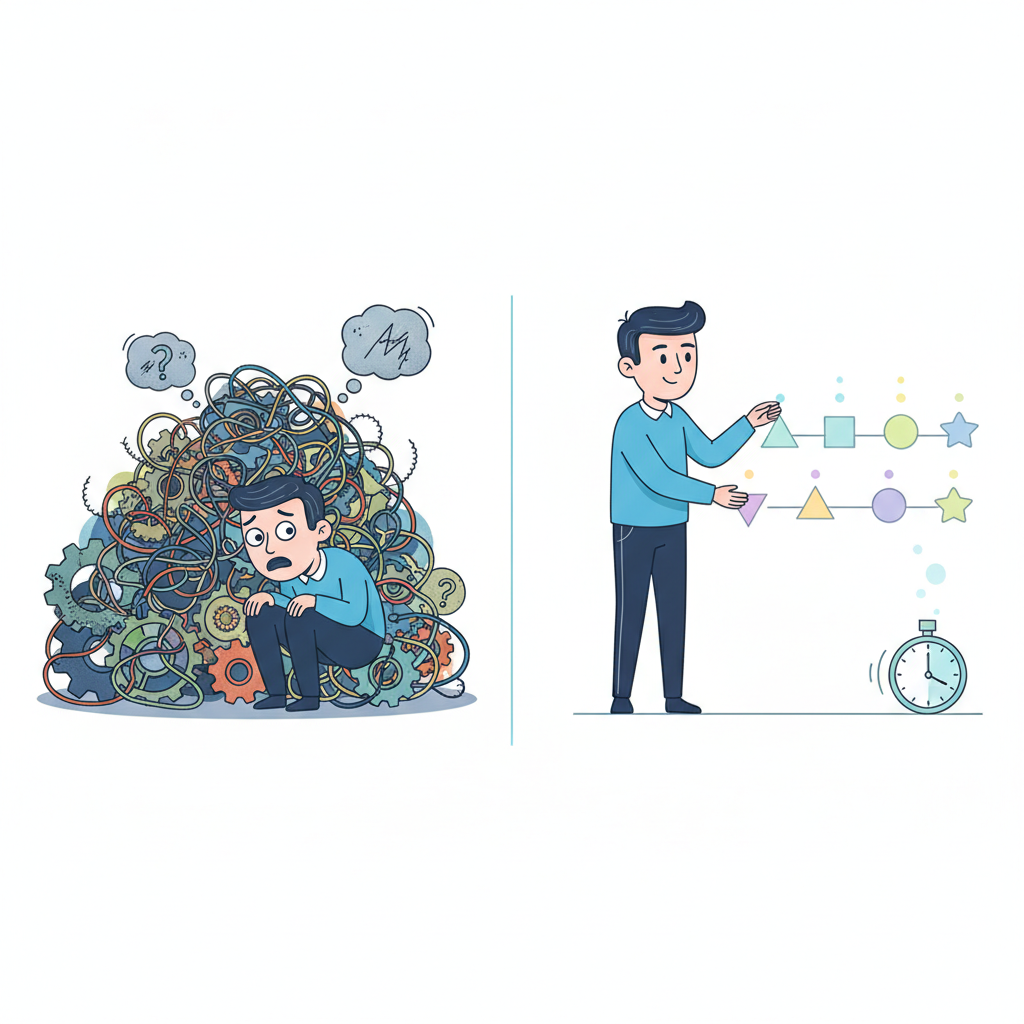
The benefits include reducing procrastination, clearing mental clutter, building momentum, increasing productivity, boosting confidence through small wins, and making habit formation easier. It helps transform the feeling of being overwhelmed into a sense of progress and control.
Are there any downsides to the Two-Minute Rule?
The Two-Minute Rule is primarily a strategy for getting started and handling small, immediate tasks. It doesn’t replace the need for focused work sessions, planning, and sustained effort for larger, more complex projects. It’s a powerful starting mechanism, but subsequent strategies are needed for deeper engagement.
How do I know if a task is a “two-minute” task?
If you can realistically complete the task from start to finish in under two minutes without significant effort or mental exertion, it qualifies. Examples include responding to a simple email, filing a single document, putting an item away, or sending a quick confirmation text. The key is low friction initiation.
Key Takeaways
- Overcome Inertia: The Two-Minute Rule provides an incredibly low barrier to entry, making it easy to start tasks and overcome procrastination.
- Build Momentum: Completing small, quick tasks creates a sense of accomplishment and builds momentum, making it easier to transition to larger, more challenging activities.
- Simplify Large Goals: Any large project can be broken down into its initial two-minute action, making it feel less daunting and more achievable.
- Habit Formation: It’s a powerful tool for establishing new habits by making the initial commitment extremely easy and focusing on consistency.
- Reduce Mental Clutter: Consistently handling small tasks immediately prevents them from piling up, freeing up mental energy and reducing feelings of overwhelm.
- Boost Confidence: Each completed two-minute task serves as a small win, accumulating evidence of your ability to follow through and boosting self-confidence.
- Versatile Application: The rule can be applied effectively across work, personal life, health, and learning contexts.
- Foundation for Progress: While not a complete solution for large projects, it’s an essential first step that enables sustained effort and progress.
This opinions posed in this article ae just that, mine. This article is for informational purposes only.
No responses yet